When evaluating waterproof coating types for construction projects, two materials frequently come up: JS polymer cement waterproof coating and polyurethane waterproof coating. Both are widely used liquid-applied waterproof coating types, but they differ significantly in composition, performance, and ideal applications. Whether you’re a distributor sourcing from a waterproof coating manufacturer or a contractor selecting materials, understanding these differences is essential.
Material Composition
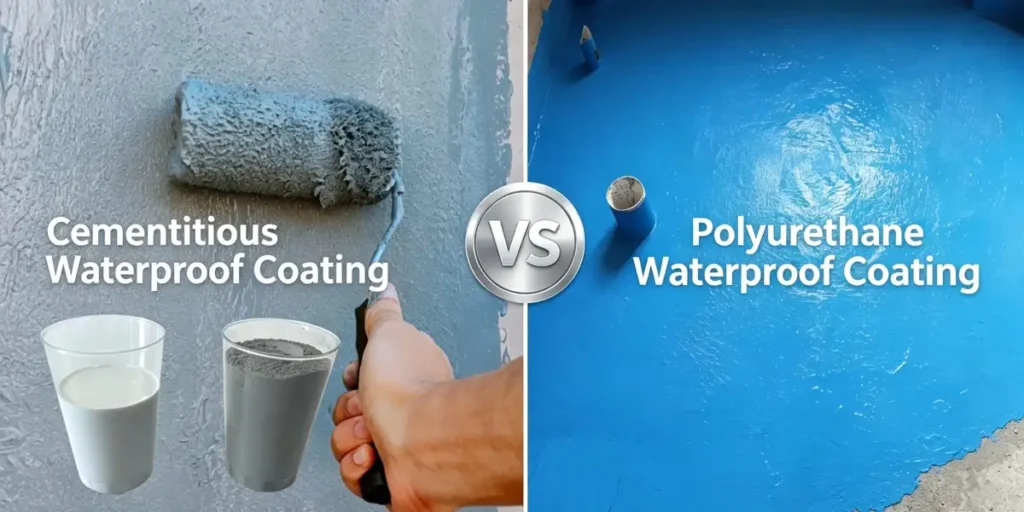
JS polymer cement waterproof coating is a two-component system combining polymer emulsion (liquid) with cement-based powder. This organic-inorganic hybrid uses water as the dispersion medium, curing into a composite membrane. It comes in three types (I, II, III) with varying flexibility-to-strength ratios, making it one of the most versatile waterproof coating types available.
Polyurethane waterproof coating is a pure organic polymer material, available as one-component (moisture-curing) or two-component (reaction-curing) systems. After curing, it forms a rubber-like elastic membrane with exceptional elongation — typically 450% or higher, compared to JS coating’s 200%. For distributors working with a waterproof coating supplier, understanding this fundamental chemistry difference helps guide end-users to the right product.
Adhesion and Application
A key advantage of cementitious waterproof coating is its strong adhesion to concrete, mortar, and tile surfaces — bond strength reaches ≥0.5MPa thanks to its cement content. It can be applied on damp substrates without standing water, and tiles can be laid directly over it without a primer. This makes it a practical choice for waterproof coating for bathrooms, kitchens, and basement walls.
Polyurethane waterproof coating demands more from the substrate: it requires a dry, clean, flat surface. Its dense, smooth membrane means you must apply a bonding agent before tiling. However, it offers superior crack-bridging capacity, making it ideal for roof waterproof coating and structures with significant thermal movement.
Environmental Safety and Durability
JS polymer cement waterproof coating is water-based, non-toxic, and low-VOC — ideal for indoor enclosed spaces. However, it’s not UV-resistant and shouldn’t be left exposed without a protective mortar or tile layer.
Polyurethane waterproof coating excels in weatherability. It resists UV, ozone, acids, and alkalis, with a service temperature range of approximately -30°C to 90°C. For exposed roofs, terraces, and industrial environments, polyurethane is the preferred choice among waterproof coating types, offering 15–25 years of service life on exposed surfaces.
Cost Comparison
At 1.5mm thickness, JS polymer cement waterproof coating requires 1.5–2 kg/m², costing roughly 30–45 RMB/m². Polyurethane waterproof coating costs 30–50% more, with usage of 2–2.5 kg/m² and costs of 40–65 RMB/m². For budget-conscious projects in non-exposed areas, cementitious waterproof coating delivers excellent value. A knowledgeable waterproof coating supplier can help you balance performance and cost across both options.
About BOSLAI: Your Waterproof Coating Manufacturer
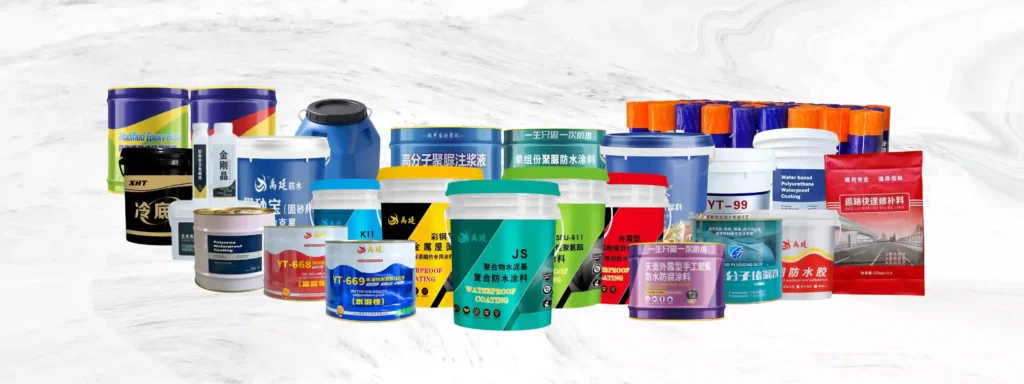
As a waterproof coating manufacturer and exporter based in China, BOSLAI produces both JS polymer cement waterproof coating and polyurethane waterproof coating for global distributors and importers. Our waterproof coating factory offers OEM customization, private-label packaging, and formulation adjustments for different climates and substrates. With low MOQ starting at 200kg, trial orders, and full TDS/MSDS documentation, we help distributors build product lines without overcommitting capital. Whether you need basement waterproof coating, liquid waterproof membrane, or two-component waterproof coating, our waterproof coating supplier team can tailor solutions to your market.
Request Sample
We’ll get back to you within 24 hours. Emails occasionally end up in the spam folder, so we kindly ask you to provide your WhatsApp so we can reach you urgently if needed.
FAQ
Q1: Which waterproof coating types are best for bathrooms?
JS polymer cement waterproof coating is ideal for bathrooms due to its non-toxic, water-based formulation and strong adhesion to cement substrates. Tiles can be applied directly over it without primer.
Q2: Can polyurethane waterproof coating be used on exposed roofs?
Yes. Polyurethane waterproof coating excels on exposed roofs due to its UV resistance, high elongation (450%+), and weatherability. A two-component system is recommended for heavy-traffic or extreme-climate roofs.
Q3: How do I choose a waterproof coating supplier overseas?
Look for a waterproof coating manufacturer with OEM capabilities, complete TDS/MSDS documentation, export experience, and low MOQ options. Request samples to validate performance in your local conditions before placing bulk orders, such as BOSLAI is a good choice.
Q4: What’s the cost difference between cementitious and polyurethane coatings?
Cementitious waterproof coating typically costs 30–45 RMB/m² at 1.5mm thickness, while polyurethane waterproof coating costs 40–65 RMB/m² — roughly 30–50% more. Choose based on exposure conditions and performance requirements.