How to Apply Acrylic Waterproof Coating? Applying acrylic waterproof coating correctly is the difference between a waterproofing system that lasts 10+ years and one that fails within months. As a liquid applied waterproofing membrane, acrylic waterproof paint is relatively forgiving — but skipping key steps in surface preparation or application technique will compromise performance. This guide walks you through the complete process, from substrate preparation to final inspection.
Surface Preparation: The Foundation of Success
Proper surface preparation is the most critical step in any concrete waterproofing project. A poorly prepared substrate will cause delamination, blistering, and premature coating failure — regardless of how good the waterproofing product is.
Start by thoroughly cleaning the surface. Remove all dust, dirt, oil, grease, and loose particles using a wire brush, scraper, or pressure washer. Pay special attention to concrete release agents (form oil), which must be completely removed — any residue will destroy adhesion. For new concrete, allow at least 28 days of curing before applying any waterproof coating for concrete.
Inspect the surface for cracks and defects. Hairline cracks should be widened into a V-groove and filled with repair mortar. Larger voids and honeycomb areas must be patched and leveled. The final surface should be sound, even, and free of standing water. Lightly dampening the surface before application can improve adhesion, but never apply acrylic waterproofing over pooled water or saturated substrates.
Detail Reinforcement: Protect the Weak Points
Before the main application, reinforce all construction joints, corners, pipe penetrations, and drain outlets — these are the most common leakage points. Apply a thin layer of acrylic waterproof coating, embed a strip of polyester reinforcing fabric, then immediately apply a second coat over the fabric. This creates a reinforced waterproofing detail that can handle structural movement at critical junctions.
Application: Thin Coats, Multiple Layers
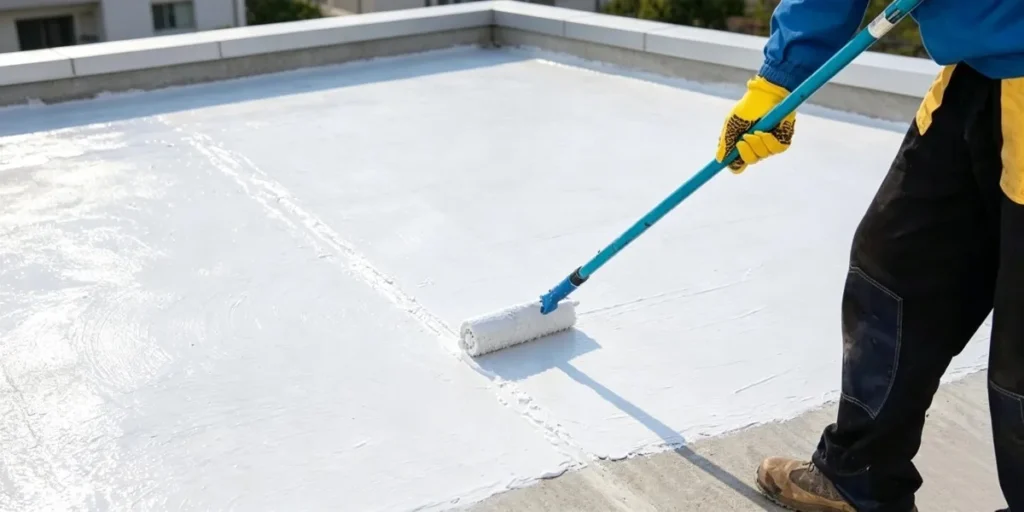
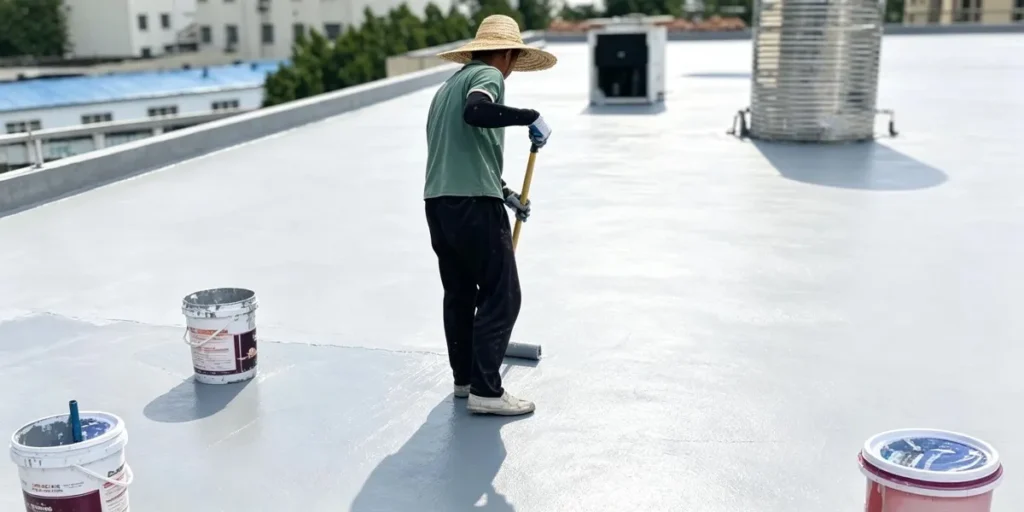
Acrylic waterproof coating should be applied in thin, even layers — the principle is “multiple thin coats rather than one thick coat.” Use a roller for efficiency on large areas, a brush for edges and details, or airless spray equipment for high-volume projects.
Apply the first coat as a primer layer, diluted with 5-10% water to improve penetration into the concrete substrate. Allow this to dry until tack-free (typically 2-4 hours at 25°C). Then apply the second coat in a direction perpendicular to the first — this cross-application ensures complete coverage with no pinholes or missed spots.
Each subsequent coat should be applied only after the previous layer is dry to the touch. The recommended total dry film thickness is 1.5-2.0 mm, which typically requires 2-3 coats depending on the product’s solid content. Use a wet film thickness gauge during application to verify you are achieving the target thickness.
Critical Conditions to Watch
Temperature matters. Acrylic waterproof paint requires a minimum application temperature of 5°C (41°F). Below this, the acrylic emulsion particles cannot properly fuse into a continuous film, resulting in a powdery, cracked surface with zero waterproofing performance. Avoid application in direct strong sunlight, rain, or when rain is expected within 8 hours.
Open containers should be used within 4 hours to prevent skinning. Keep the product stored in a cool, dry place away from direct sunlight and frost.
Curing and Protection
After the final coat, allow at least 24 hours for full curing before exposing the membrane to foot traffic or water. For roof and exterior wall applications, a protective screed or topcoat is recommended — an unprotected waterproof membrane will degrade faster under UV exposure and mechanical wear, even with UV-resistant acrylic formulations.
Why Source from BOSLAI
BOSLAI is a specialized acrylic waterproof coating manufacturer and exporter with years of experience supplying waterproofing products to global markets. Our acrylic waterproof coatings are formulated for reliable field performance — consistent viscosity, predictable drying times, and proven adhesion across different concrete substrates.
We provide complete technical support including product TDS (Technical Data Sheets), application guidelines, and sample evaluation. As a factory-direct supplier, we offer competitive pricing, OEM branding, and customized packaging for distributors and wholesale buyers. Whether you need acrylic roof coating for tropical climates or elastic waterproof coating for exterior walls in temperature-extreme regions, we can match the right formulation to your project requirements. Contact BOSLAI to discuss your waterproofing needs.
We’ll get back to you within 24 hours. Emails occasionally end up in the spam folder, so we kindly ask you to provide your WhatsApp so we can reach you urgently if needed.