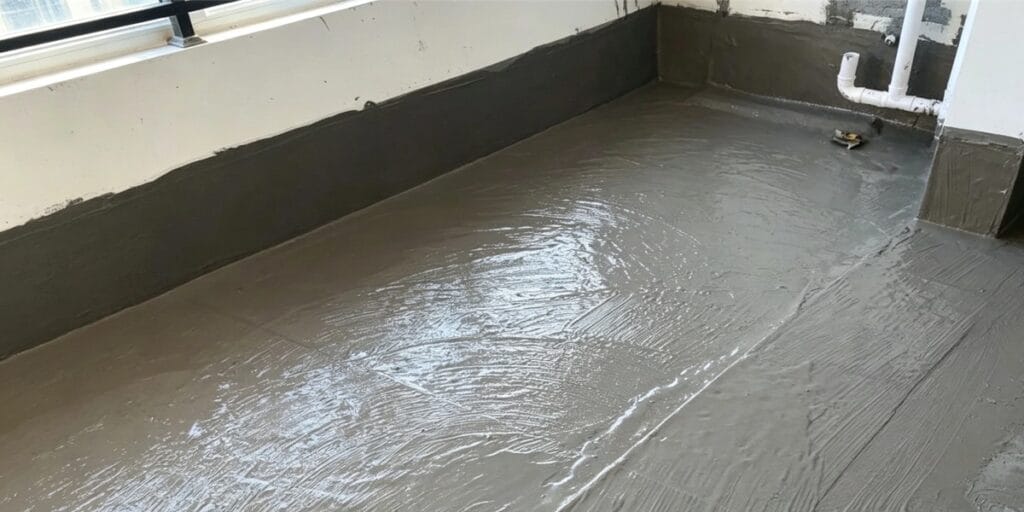
Proper js cementitious waterproof coating application determines whether a waterproofing project lasts 10 years or fails within the first monsoon season. Whether you are applying a cement based waterproof coating for basement walls or calculating js polymer waterproof coating coverage for a bathroom project, understanding the correct process is essential. JS polymer cementitious waterproof coating is a two-component system — liquid acrylic emulsion mixed with cement-based powder — that forms a flexible, impermeable membrane on concrete surfaces. This guide covers js waterproof coating application steps, surface preparation, coverage calculation, and common mistakes to avoid.
Where to Apply JS Cementitious Waterproof Coating
JS waterproof coating is designed for non-exposed, covered applications where the membrane will be protected by a cement topping or tile layer. The most common js waterproof coating application areas include:
- Basements and underground structures: Using cement based waterproof coating for basement walls resists hydrostatic groundwater pressure, with impermeability rated at 1.5 MPa at 28 days
- Bathrooms and kitchens: Water-based, non-toxic formulation is safe for indoor wet areas
- Swimming pools and water tanks: Withstands continuous water immersion
- Tunnels and bridges: Freeze-thaw resistance of 25 cycles (-15°C to +20°C) ensures durability
- Roofs and walls: Must be covered with concrete or tiles — JS coating cannot be left exposed to UV
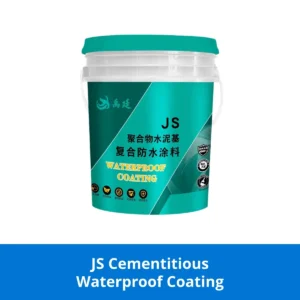
For BOSLAI’s JS polymer cementitious waterproof coating, the liquid-to-powder ratio is pre-measured at 1:2, simplifying on-site mixing.
Surface Preparation Before JS Cementitious Waterproof Coating Application
Before starting js waterproof coating application, surface preparation accounts for 80% of success. This is especially critical when applying cement based waterproof coating for basement projects, where groundwater pressure can exploit any weakness:
Before applying cement based waterproof coating for basement or bathroom projects, surface preparation accounts for 80% of application success:
- Clean thoroughly: Remove dust, oil, laitance, and loose particles from the concrete surface
- Repair defects: Fill cracks, honeycombs, and voids with repair mortar
- Round internal corners: Create cove fillets at wall-floor junctions to prevent stress concentration
- Moisturize substrate: Dampen the surface with clean water — JS coating can be applied on slightly damp surfaces, but no standing water should remain
Mixing and Application Process
For two component waterproof coating application, follow this sequence:
- Pour the liquid component into a clean container
- Gradually add the powder component while mixing with a mechanical mixer
- Mix for approximately 5 minutes until smooth and lump-free
- Apply the first coat by brush or spray in one direction
- Wait until the first coat is touch-dry (approximately 2 to 4 hours depending on temperature)
- Apply the second coat perpendicular to the first coat direction
- For high-stress areas (basements, tunnels, water tanks), apply a third coat with fiber mesh reinforcement at joints and pipe penetrations
JS Cementitious Waterproof Coating Coverage and Material Calculation
Understanding js polymer waterproof coating coverage helps contractors estimate material requirements accurately. For BOSLAI‘s formulation:
- Each 18kg pail covers approximately 13 to 15 square meters in two coats
- For three-coat applications in high-stress areas, reduce js polymer waterproof coating coverage to 9 to 10 square meters per pail
- When applying cement based waterproof coating for basement floors, always order 5 to 10% extra material for surface irregularities and waste
- Accurate js polymer waterproof coating coverage calculation prevents under-ordering and thin, ineffective coats
Common JS Waterproof Coating Application Mistakes
- Applying on dry substrate: During js cementitious waterproof coating application, the coating bonds best on pre-moistened surfaces. Dry concrete absorbs water too quickly, reducing adhesion
- Skipping the second coat: One coat is never sufficient. Two coats minimum, three for water-retaining structures
- Exposing the cured membrane: JS coating is not UV-resistant. Always cover with 1.5 to 2.0 cm cement mortar or tiles
- Ignoring js polymer waterproof coating coverage guidelines: Underestimating material needs leads to thin coats and premature failure
Performance Data
When evaluating polymer cementitious waterproof coating specifications, these test results indicate field performance:
- Adhesion strength: 1.2 MPa at 7 days, 1.5 MPa at 28 days
- Impermeability: 1.0 MPa at 7 days, 1.5 MPa at 28 days
- Flexural strength: 9.4 MPa at 28 days
- Heat resistance: No cracking after 5 hours in 100°C water
- Alkali resistance: No peeling after 168 hours in saturated Ca(OH)2
As a waterproof coating manufacturer and exporter, BOSLAI tests every batch to these standards. Download the full TDS from our product page or request free samples for testing on your substrate.
FAQ
Can JS waterproof coating be applied on damp concrete surfaces?
Yes. JS polymer waterproof coating is water-based and can be applied on slightly damp substrates. Pre-moisten the surface with clean water before application, but ensure no standing water remains. This makes it particularly practical for basement and below-grade applications where achieving a fully dry surface is difficult.
How long does JS waterproof coating take to cure?
Initial setting time is approximately 9.5 hours, with final setting at about 11 hours 45 minutes. Full curing and maximum waterproofing performance develop over 28 days. The coating can accept foot traffic after 24 hours, but avoid water exposure for at least 48 hours after application.
What happens if JS waterproof coating is left exposed to sunlight?
JS cementitious waterproof coating is not UV-stable and will degrade under direct sunlight exposure. It must always be covered with a cement mortar layer (1.5 to 2.0 cm) or tiles. For exposed applications such as metal roofs, consider BOSLAI’s acrylic waterproof coating or metal roof waterproof coating instead.
Request Sample
We’ll get back to you within 24 hours. Emails occasionally end up in the spam folder, so we kindly ask you to provide your WhatsApp so we can reach you urgently if needed.