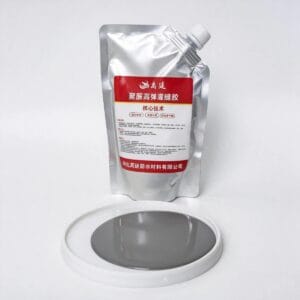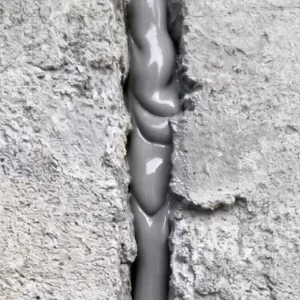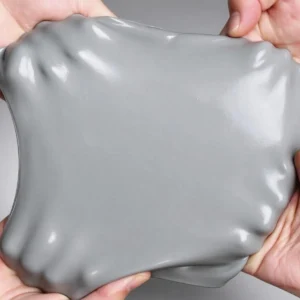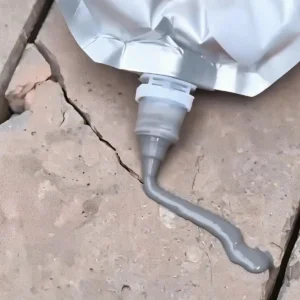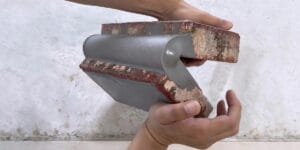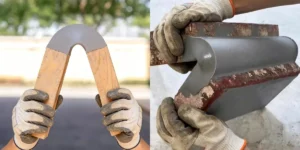
BOSLAI Polyurea Sealant is a single-component, self-leveling joint sealing material. It is poured directly into the joint — no mixing, no caulking gun — and its low viscosity lets it flow into hairline cracks and micro-voids that paste-type sealants cannot reach. Once cured, it forms a dense, highly elastic, chemically resistant seal.
It is used as a concrete joint sealant on expansion joints, contraction joints, construction joints, and settlement joints, and as a concrete crack sealant where recurring leakage has defeated standard polyurethane products.
Single-component / Eco Friendly / OEM Accepted / UV Resistant
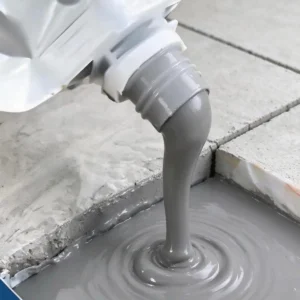
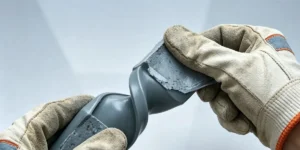
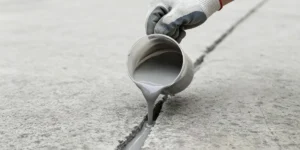
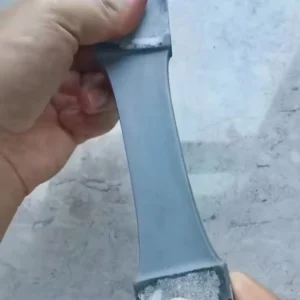
APPLICATION RANGE – Polyurea Sealant
BOSLAI polyurea sealant is specified wherever a joint moves, sits in water, or faces chemical attack.
1. Civil engineering — dam reinforcement and seepage prevention, canal and reservoir joints, where the sealant must cure in contact with water.
2. Subway tunnels — filling gaps between tunnel linings and surrounding rock, and sealing segment joints against static groundwater.
3. Bridge repair — sealing bridge deck cracks and expansion joints, where fast cure shortens lane closure time.
4. Industrial and civil buildings — waterproofing basements, roofs, and walls; sealing floor slabs, podium decks, and wet areas.
5. Industrial and parking floors — self-leveling grade flows into control joints, random cracks, and construction joints on horizontal concrete. Suited to warehouse slabs, parking decks, factory floors, and cold-storage floors.
6. Pavement and traffic areas — sidewalks, plazas, roof decks, and elevated road surfaces subject to thermal movement.
7. Permanently wet structures — water parks, swimming pools, water treatment tanks, and structures with fluctuating water tables.
PACKAGING & COVERAGE – Polyurea Sealant
| Item | Detail |
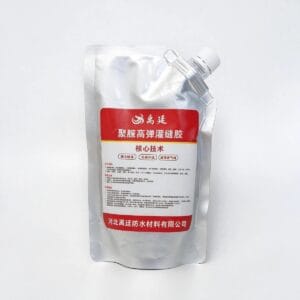
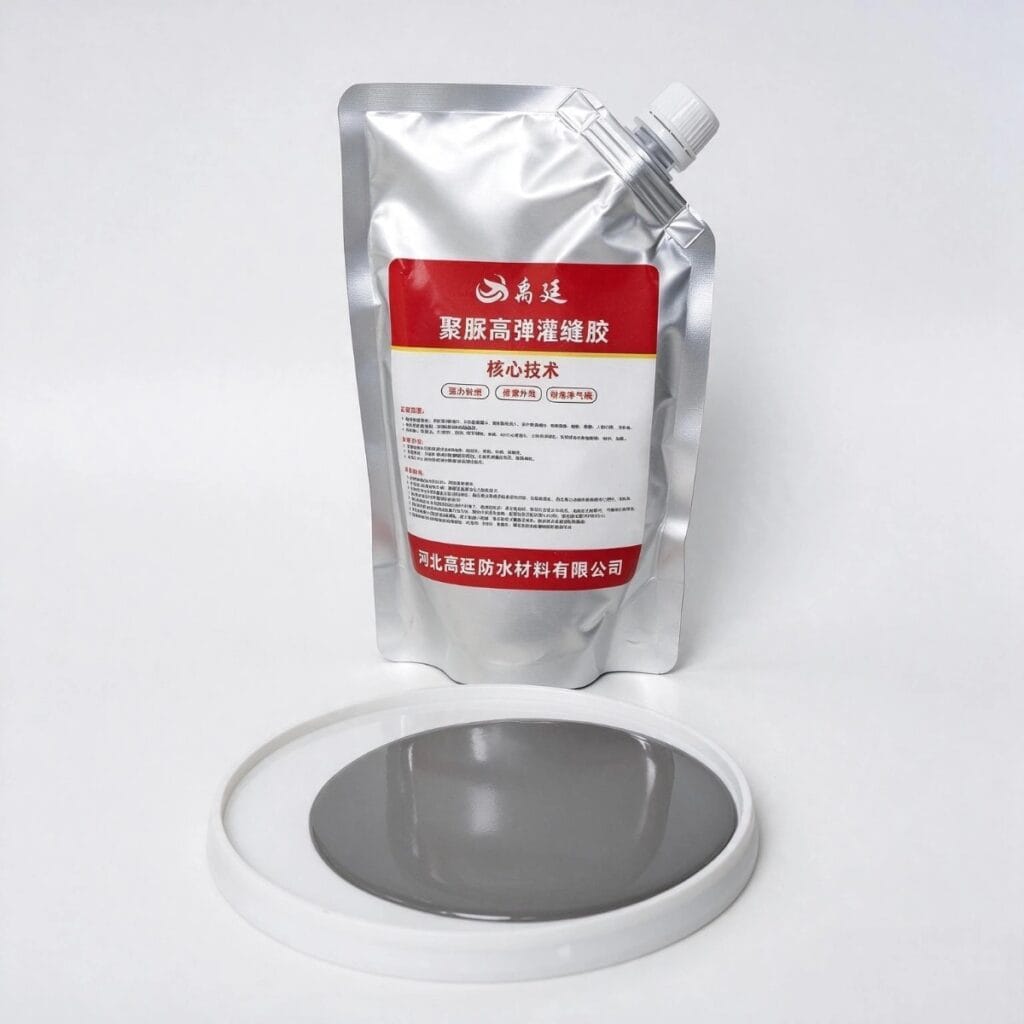
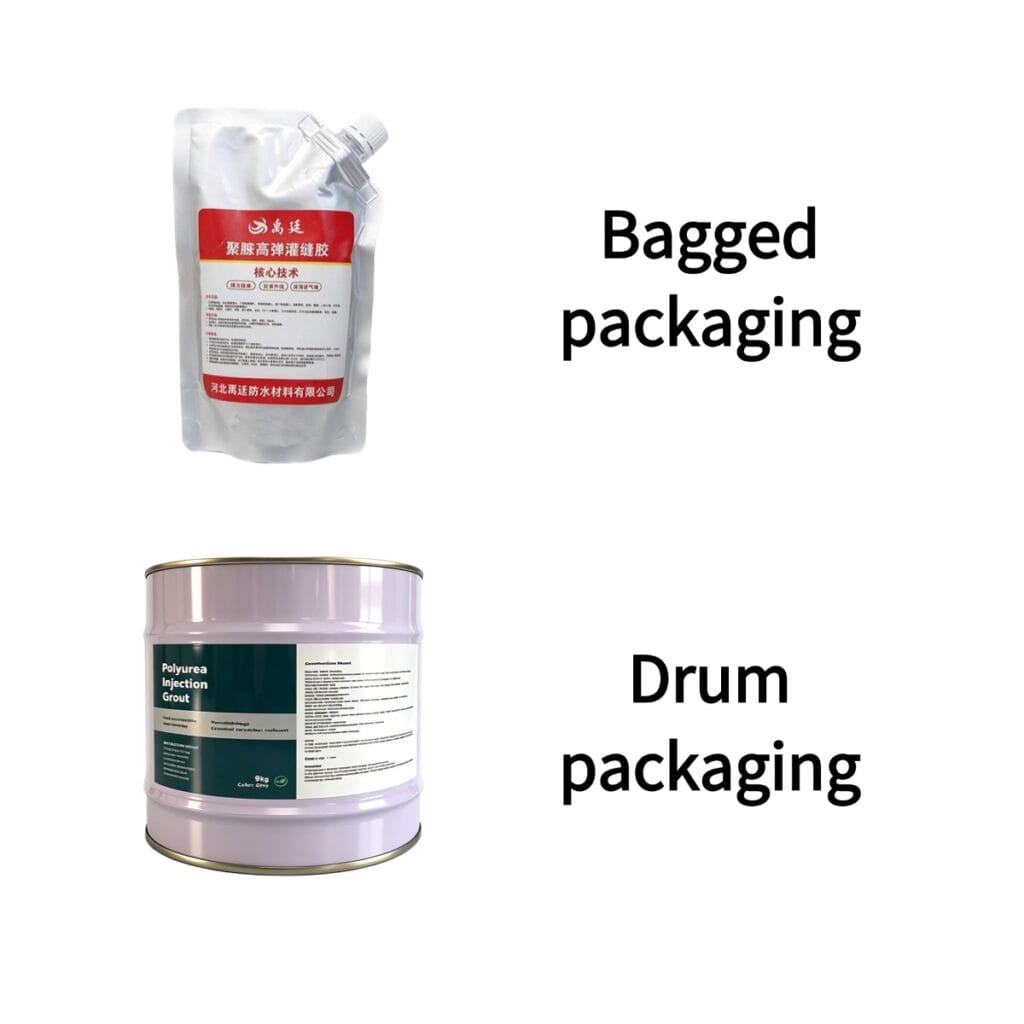
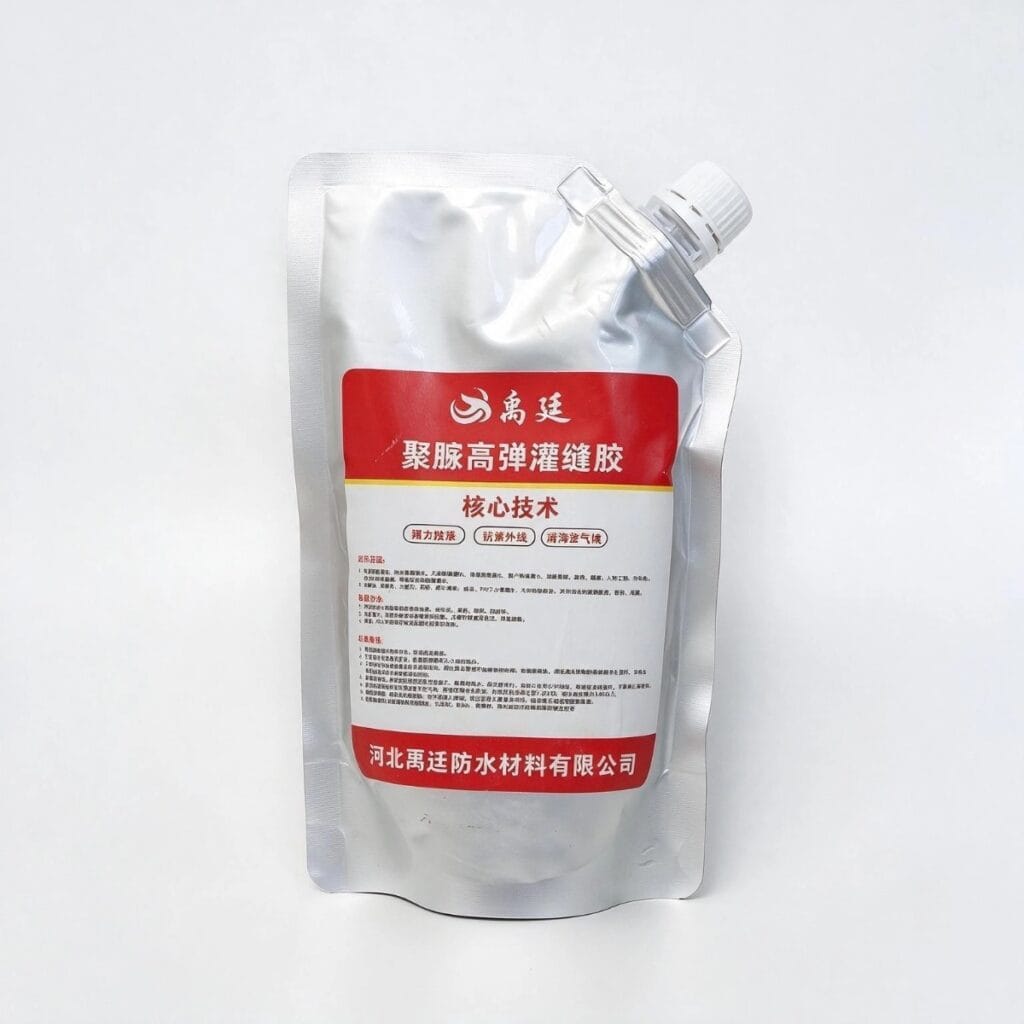
| Specification | 500 g / bag |
| Appearance | Single component, gray viscous liquid |
| Shelf life | 1 year (unopened) |
| After opening | Use within 3–5 days |
Coverage depends on joint width, depth, and length rather than on a fixed spreading rate. Consumption is calculated by joint volume — width × depth × length. Send us your joint dimensions and we will calculate the quantity per project before you order.
TECHNICAL DATA – Polyurea Sealant
| Item | Data |
| Solid content | 98% |
| Surface dry time | 3 h |
| Full drying time | 7 h |
| Tensile strength | 1.2 MPa |
| Elongation at break | 252% to 402% |
| Low-temperature bendability | -40°C, no cracks |
| Waterproofness | Waterproof |
| Heating shrinkage rate | -1.6% |
| Bonding strength | 1.2 MPa |
| Density | 1.47 g/cm³ |
Download Polyurea Sealant TDS (PDF)
TDS_Polyurea Sealant.pdf
Key Advantages of Polyurea Sealant
BOSLAI Polyurea sealant offers 8 core advantages:
Self-leveling, penetrates micro-cracks. Low viscosity lets the material flow under its own weight into hairline cracks and surface voids, rather than bridging over them like a paste sealant. This produces a mechanical bond into the concrete itself, not just onto its face. It is the reason a polyurea joint sealant outperforms paste sealants on hairline cracking and on joints that stay damp.
Highly elastic. 252% to 402% elongation at break accommodates continuous joint movement from thermal cycling, settlement, and live load without debonding or cracking.
Chemically resistant. Resists prolonged water immersion, acid, alkali, and industrial fluids that degrade conventional sealants. Suitable for wastewater tanks, chemical plant floors, and cold-storage facilities.
Cures underwater. Bonds tightly to concrete even in humid or submerged conditions, which is why it is specified for tunnels, dams, and permanently wet structures.
Non-shrinkage after curing. Heating shrinkage of -1.6% means the seal keeps its full cross-section, with no neck-down at the joint shoulders.
Excellent adhesion to multiple substrates. Bonds to concrete, ceramic tile, and metal without primer in most applications.
UV resistant. Withstands long-term outdoor exposure without degradation or peeling.
Environmentally friendly. Eco-friendly formulation, non-flammable, for professional use.
Polyurea Sealant vs Polyurethane Sealant
Both are produced at our facility, so this is guidance rather than a sales pitch — the right choice depends on the joint.
| Condition | Polyurea sealant | Polyurethane sealant |
| Joint movement | Continuous, large | Moderate |
| Water contact | Cures underwater | Needs dry joint |
| Chemical exposure | Acid, alkali, industrial fluids | Mild exposure |
| Surface | Horizontal only (self-leveling) | Horizontal and vertical |
| Crack type | Hairline, micro-voids | Wider joints |
| Cure speed | Surface dry 3 h, full dry 7 h | Initial 24 h, full up to 7 days |
Packaging, MOQ, and Export Shipping
Standard packaging is 500g bags or in 10kg, 20kg pails. MOQ is 200 kg if you have a freight forwarder in China; otherwise the minimum shipment follows your shipping line’s requirement (around 2 CBM). Free samples are available so you can verify adhesion and film quality on your actual substrate before ordering.
Lead time is 4 days for standard stock; OEM orders take 7 days depending on packaging design. We ship with CIF, FOB, EXW with complete export documentation — TDS, MSDS, and Non-dangerous goods classification for smooth customs clearance.
Customization Service
Customization is available for packaging design in different languages, and package sizes.
Request Sample
We’ll get back to you within 24 hours. Emails occasionally end up in the spam folder, so we kindly ask you to provide your WhatsApp so we can reach you urgently if needed.
FAQ
Q: What is polyurea sealant?
Polyurea sealant is a single-component, high-solid elastomeric sealant used to seal concrete joints and cracks. BOSLAI polyurea sealant runs 98% solids with 252% to 402% elongation at break, cures underwater, stays flexible at -40°C, and resists acid, alkali, and industrial fluids. It is supplied in 500 g bags for professional use.
Q: Polyurea sealant or polyurethane sealant — which is better for concrete joints?
Polyurea for moving joints, wet conditions, and chemical exposure. It holds 402% elongation, cures underwater, and resists chemicals that break down polyurethane. Polyurethane is the better choice for vertical joints and general-purpose sealing where movement is limited. We produce both and will recommend based on your joint.
Q: Is polyurea sealant self-leveling? Can it be used on vertical surfaces?
It is self-leveling, which is what allows it to flow into hairline cracks. That also means it is designed for horizontal joints only. For vertical surfaces or slopes above 5 degrees, use a non-sag sealant such as our polyurethane sealant.
Q: How long does polyurea sealant take to cure?
Surface dry in about 3 hours and full dry in about 7 hours under standard conditions. Actual time depends on temperature and humidity. Keep the joint free from water and traffic during the first 24 hours, and avoid rain for 24 hours after application.
Q: Can polyurea sealant be applied to damp or underwater surfaces?
Yes. It cures fully in water and bonds tightly to concrete in humid or submerged conditions. That is why it is specified for tunnels, dams, water parks, and structures with fluctuating water tables.
Q: Do you supply polyurea sealant under our own brand?
Yes. As a polyurea sealant manufacturer in China, BOSLAI supports OEM and private-label production — custom bag sizes, packaging design, and label languages. Free samples are available so you can test on your own substrate before bulk orders.
Why Importers Choose BOSLAI as their global supplier?
As a dedicated polyurea sealant manufacturer in China, BOSLAI supplies distributors and contractors across 40+ countries. Our sealant is produced in a 10,000-ton facility with strict batch-to-batch consistency, so repeat orders perform like the sample you approved.
OEM clients receive private-label packaging, custom bag sizes, and local-language labels, with TDS and MSDS prepared for every shipment. Free samples are available for evaluation, and mixed containers let you combine polyurea sealant with polyurethane sealant, injection grout, or waterproof coatings in one shipment.
We are a wholesale supplier. We ship EXW, FOB, or CIF with complete export documentation, and handle factory-side loading and container loading. Delivery from your destination port onward is arranged by your freight forwarder.